Wednesday, November 13, 2013

Presentation #2

Today was our last RW class...:(

Moe - Her presentation kept the audience's attention because how she presented was very smooth and her speech was well organized.

Megumi Kii - I liked her opening speech and how she used her personal experience. I didn't know that people threw away trash every 7 meters. ahaha  

Maki - I thought her presentation was quite different than other people;s 

Natsuko - I really liked how she used Takumi as an example when talking about the mobile applicatin LINE.

Kenta - Even though Kenta had the same topic as Moe, I think he looked at Honda from a different perspective which was good because I learned about him mroe.

Shiho - I really liked her research topic. If I had that idea, I would have loved to research that topic too.

Yusuke - I thought his presentation was perfect for him because I knew he liked history. 

Overall, everyone's presentation was really good and I'm really sad that I won't be able to listen to more of their presentations since ELA is over.

Thank you Ken for teaching us this term. I think Stream1A is blessed to have had two great teachers two terms in a row. Ken's class helped me think about what it is to be a leader, communication skills and overall analyze my life. I really enjoyed listening to the guest speakers. Thank you Ken! :)

Sunday, November 10, 2013

Presentations

Wow, I cannot believe that we are already done with our research writing and moving on to the presentations!! This term, time is limited so we can't do a long presentation, which is a shame because everyone's topics are so interesting!! 

Take - I really liked his use of images. The images he chose were very capturing so I could relate to what he was presenting about.

Takumi - His explanation of the graph he used was very surprising. I learned that there are certain reasons why the sale goes up and down. For example, when its christmas or holidays sales go up.

Megumi H - I didn't know much about Cola except that its bad for you and melts your teeth(I heard this from somewhere when I was a kid) so her presentation information was new to me. Since she lived in Atlanta, I understand why she chose that topic!!

Kristi - I knew Tsuda Umeko from Tsuda university so it was interesting listening to Kristi's presentation. I really like how she brought the books she referenced at the end :)

Hitomi - I take psychology class with her and we talked about her interest in psychology so it was interesting to hear her presentation. 

Can't wait for the other presentations!!

Thursday, October 31, 2013

10/28-10/30 Guest Speakers


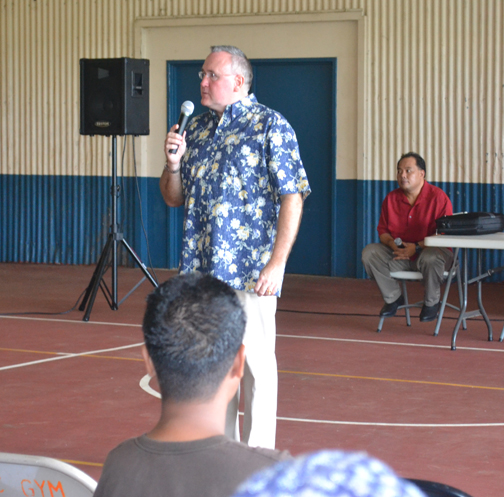
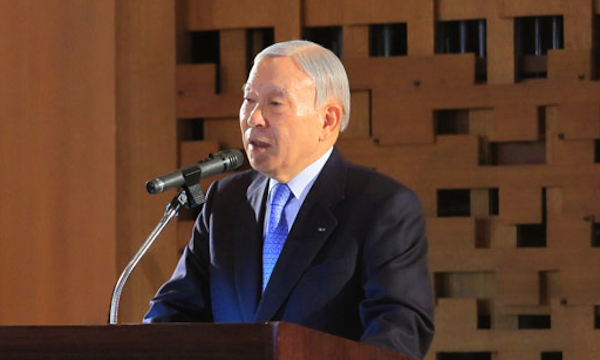
This week we had three guest speakers, Mr. Kitashiro, Dr. Daisy and Mr Floyd.

The first year students has already seen Mr. Kitashiro during the entrance ceremony. In his speech I remember him using his ATM quote. (Akaruku Tanoshiku Maemukini) Mr. Kitashiro's presentation was really inspiring. He had many good tips about leadership. From high school I always told myself that I needed to learn the history of my own country but I never got around to it because I prioritized other things. But from Mr. Kitashiro's speech I knew that I needed to learn soon because I learned that history can come up in business conversation and this will effect the relationship with other people. He also stressed about presentation skills such as everything should be in 3s.
Dr. Daisy's story was really shocking. If I were in his position when deciding whether to take the seat of presidency I would seriously think it out because I would put my whole career on the line. But I guess life is about taking risks and I really respect him for pulling the university back on its feet. Dr. Daisy talked about the difficulty of faculty coming up to him to be ordered or getting his permission. I think getting orders is easy because you don't really need to think about what you have to do, you just do the work that is told. However, many adults have told me that I should take initiative and think for myself. It's easy to do orders but its hard to think for yourself. As Mr. Kitashiro said, when facing an easy or a difficult job, choose the difficult one.

Images from
http://www.icu.ac.jp/en/20130405-3.html
http://www.comfsm.fm/myShark/news/item=259/mod=02:34:41

Wednesday, October 23, 2013

10/21 Hibiya Sensei


you create

I was looking forward to this class since the moment Ken told us. I am truly thankful to Ken who made this happen and to Hibiya sensei who made the time for us to speak to us. Her class was an opportunity to get to know her better as well as ICU. I thought the president would have a speech memorized and the speech would be just like the things people usually say like GO FOR IT or those cliches but she was different. Her speech was very lively with humor. I especially like the parts where she talked about her meetings with other presidents. I really liked the leadership qualities she chose; 4. to be healthy and 8. to laugh and celebrate. I stated previously in my blogs that I thought those two were important as well.

Her speech made me want to get more involved in ICU and also take an opportunity to do something. So that day there was a dorm meeting where we had to choose our next dorm floor leader. There are 3 floors in our dorm and there is a floor leader on each floor. I decided to run and I was elected a the floor leader! It is only for a year but I hope I can contribute so that my floormates could live comfortably.


Image from:
http://www.ifreecan.com/on-scary-decisions-opportunity-costs/

Thursday, October 17, 2013

Leading at the Edge #5 Chapter 8 & 9

celebrate
I loved Chapter 8 which talked about celebrating and having laughter in tense situations. I think celebrations were important to Shackleton and the crew because it was a goal that they could focus on. It would be a milestone for them to say they've come or lived this far. The crew can work hard until that day and find rest in the festivities. In my dance club we have a "tachiage" and "uchiage". "Uchiage" is common because we celebrate the end of our hard work but I never knew about "tachiage" until now. "Tachiage" is somewhat of a party to get to know everyone and talk about our goals for what we accomplish during the time we're spending together. The line at the end, Laugh at yourself is something I never do. When I was discussing this with Shiho and Take, Shiho told me that I never laugh at myself, rather I laugh with myself. I never laugh at myself because if I do something stupid I would think about why I did it and be really down but later on I when I'm talking to other people I think more objectively and laugh at what I did together with friends.

Take a risk♥


Ahhh the Big Risk. I would say I'm really afraid of taking risks. Shackleton's story was about how he chose carefully when to act and when not to. I'm the person who acts first rather than think about it so if an opportunity is presented right in front of me, I have to think about it and therefore it makes me think too far in it by the time I either forget about it, make a stupid decision, or the opportunity is missed. I think Shackleton was under a lot of pressure because he had to make decisions concerning others lives. Today I faced a risk that might improve my effectiveness as a leader. There was a job opportunity but I couldn't think about it much because I had a class I needed to attend to. It was a job for clothing and I really do love fashion but I'm not confident enough to style them. But on the other hand I think it would be a great opportunity because I've never had a part time job and I can learn so much for working. My parents had been bugging about working so it was such a coincidence. If I don't learn and experience new things, I don't think I can be a leader.
So take the risk and just do it. 

Image by
http://www.pinterest.com/pin/161425967865294607/
http://weheartit.com/entry/82297033/upload
http://carriehopefletcher.com/post/19112953401/so-take-the-risk-and-just-do-it

Wednesday, October 16, 2013

Class 10/15 Troublemakers

image


In class we talked about how we deal with troublemakers personally or in groups. In personal situations, when I know a person who I don't really get along with, I try to be civil with them. Especially in a group if the two are the only ones fighting I don't want to get other people involved so I try to be civil. I've learned that you don't have to try to be friends. You can just be nice to them when in groups but when you're alone you don't have to try and hang out or see each other.
In groups however, troublemakers can be a setback like with Shakleton. Ken mentioned an example of an experiment where one person acted negatively and the whole play became negative. This reminded me of dance because when dancing in groups if one person is not dancing like the others it affects the whole choreography and the dance would look bad.

Image from
http://theevangelista.com/

Monday, October 7, 2013

Leading at the Edge #4 Chapter 6 & 7


**Just a quick clear-up about my blogs:
My first experience with blogs was last term. I've never written blogs before but it was fun looking at other people's views on different topics. In my spring term I always wrote a draft and later on published them because I wanted to think about what I was writing for some time so I can write from a wider perspective and in-depth detail. But from now on I will publish them as soon as I write them. Also, for the blogs that aren't text related I thought we were allowed to talk about things in life but from reading blogs of others I finally understood that wasn't the case. When Ken said other than the text I thought he literally meant something other than the text but now I know he meant about class. Whoops. Sorry Ken! I'll publish one about the book and one about class starting this week!

-----------------------------------------------------------------------------------------------------------------------------

Like the author said in the intro of Chapter 6, Chapter 6 was similar to Chapter 5 in ways of taking care of others to work together. On page 102 it says, "People understand the need for legitimate authority and for differences in salaries, roles, and titles" I though this would be a topic debatable in an International Relations class. Maybe in theory even Communism needs a superior like the government to foresee equality among workers but how did this theory come about? Why is that for example in a company the boss might not do anything but get paid more than the workers? Isn't that unfair? I understand the legitimate authority part but I was confused by the latter part. I wanted to know the reason behind this statement. I think the example that the author gave about his first job after graduating Harvard was similar to the example Ken told us in class about a boss who always sat at a simple desk near the elevator so he could talk to the employees. 


Chapter 7 was about Conflict. We've already talked about this a little in today's class. One of the solutions to solve conflicts that the book sated was "to talk through the disagreements ... but the truces were only temporary."So I guess talking didn't work but Shakleton used "teamwork" again. The book describes that being emotional is bad in conflicts and I remembered it was also bad in negotiations as well. "Moose on the Table" reminded me of another idiom but I forget what it was. Was it the big elephant in the room? The story about Frank Hurley showed that people actually do better when they are seen and praised. I think people who make others feel special are the ones who become leader-like figures. At the end of the chapter it said, "It is vital to decide which battles are worth fighting and which are not." I said this in my last blog post but I think this is really true. Fighting all battles is not the smartest thing to do because it makes the atmosphere bad when it involves people and you can lose energy and become stressful.